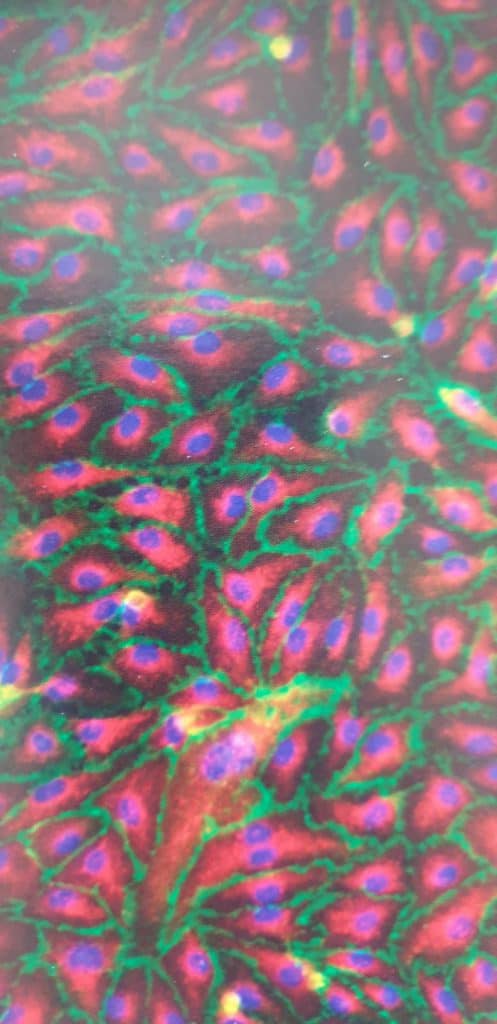
Nrf2-regulated redox signaling in mind endothelial cells tailored to physiological oxygen ranges: Penalties for sulforaphane mediated safety in opposition to hypoxia-reoxygenation
Ischemic stroke is related to a surge in reactive oxygen species era throughout reperfusion. The slender therapeutic window for the supply of intravenous thrombolysis and endovascular thrombectomy limits therapeutic choices for sufferers. Thus, understanding the mechanisms regulating neurovascular redox defenses are key for improved scientific translation. Our earlier research in a rodent mannequin of ischemic stroke established that activation of Nrf2 protection enzymes by pretreatment with sulforaphane (SFN) affords safety in opposition to neurovascular and neurological deficits.
We right here additional examine SFN mediated safety in mouse mind microvascular endothelial cells (bEnd.3) tailored long-term (5 days) to hyperoxic (18 kPa) and normoxic (5 kPa) O2 ranges. Utilizing an O2-sensitive phosphorescent nanoparticle probe, we measured an intracellular O2 degree of three.4 ± 0.1 kPa in bEnd Three cells cultured below 5 kPa O2. Induction of HO-1 and GCLM by SFN (2.5 μM) was considerably attenuated in cells tailored to five kPa O2, regardless of nuclear accumulation of Nrf2. To simulate ischemic stroke, bEnd.Three cells have been tailored to 18 or 5 kPa O2 and subjected to hypoxia (1 kPa O2, 1 h) and reoxygenation.
In cells tailored to 18 kPa O2, reoxygenation induced free radical era was abrogated by PEG-SOD and considerably attenuated by pretreatment with SFN (2.5 μM). Silencing Nrf2 transcription abrogated HO-1 and NQO1 induction and led to a major enhance in reoxygenation induced free radical era.
Notably, reoxygenation induced oxidative stress, assayed utilizing the luminescence probe L-012 and fluorescence probes MitoSOX™ Pink and FeRhoNox™-1, was diminished in cells cultured below 5 kPa O2, indicating an altered redox phenotype in mind microvascular cells tailored to physiological normoxia. As redox and different intracellular signaling pathways are critically affected by O2, the event of antioxidant therapies focusing on the Keap1-Nrf2 protection pathway in remedy of ischemia-reperfusion harm in stroke, coronary and renal illness would require in vitro research carried out below well-defined O2 ranges.
Associations of sleep traits with alpha-synuclein in cerebrospinal fluid in older adults
Goal: Sleep problems as a preclinical symptom of synucleinopathies develop into extra prevalent in older adults. Synucleinopathies is perhaps brought on by the irregular aggregation of alpha-synuclein within the mind, which was indicated by alpha-synuclein ranges in cerebrospinal fluid (CSF). We aimed to analyze associations of sleep traits with CSF alpha-synuclein in older adults.
Strategies: Our examine recruited 536 cognitively intact people (aged between 40 and 90 years outdated) from the Chinese language Alzheimer’s Biomarker and Life-style examine. Sleep behaviors have been assessed by Pittsburgh Sleep High quality Index and whole alpha-synuclein in CSF was measured by enzyme-linked immune-sorbent assay. We used a number of linear and non-linear regression fashions for analysis.
Outcomes: Vital non-linear associations of CSF alpha-synuclein with sleep time and period have been revealed. People who went to mattress and fell asleep too early or late tended to have decrease CSF alpha-synuclein (reflection level for time to mattress and go to sleep have been 10:26 p.m. and 10:40 p.m.).
Decrease CSF alpha-synuclein was additionally noticed in people with both extreme or inadequate sleep period (reflection level: 7.24 hours). Moreover, general poor sleep high quality (β = -0.0621; P = 0.0242), longer sleep latency (β = -0.0415; P = 0.0174) and decrease sleep effectivity (β = 0.0036; P = 0.0017) confirmed linear associations with decrease CSF alpha-synuclein. Sleep disturbances and daytime dysfunction weren’t considerably related to CSF alpha-synuclein.
Interpretation: Poor sleep was related to decrease ranges of CSF alpha-synuclein in older adults, which can present new perception into the prevention of synucleinopathies.
Consumption and metabolism of omega-Three and omega-6 polyunsaturated fatty acids: dietary implications for cardiometabolic illnesses
Potential observational research help using long-chain omega-Three polyunsaturated fatty acids (PUFAs) within the main prevention of atherosclerotic heart problems; nevertheless, randomised managed trials, have typically reported impartial findings. There’s a lengthy historical past of debate concerning the potential dangerous results of a excessive consumption of omega-6 PUFAs, though this concept just isn’t supported by potential observational research or randomised managed trials.
Well being results of PUFAs is perhaps influenced by Δ-5 and Δ-6 desaturases, the important thing enzymeswithin the metabolism of PUFAs. The exercise of those enzymes and modulation by variants in encoding genes (FADS1-2-Three gene cluster) are linked to a number of cardiometabolic traits. This Evaluate will additional think about non-genetic determinants of desaturase exercise, which have the potential to switch the supply of PUFAs to tissues.
Lastly, we talk about the results of altered desaturase exercise within the context of PUFA consumption, that’s, gene-diet interactions and their scientific and public well being implications.
Description: A competitive ELISA for quantitative measurement of Rat Aspartate Aminotransferase in samples from blood, plasma, serum, cell culture supernatant and other biological fluids. This is a high quality ELISA kit developped for optimal performance with samples from the particular species.
Description: A competitive ELISA for quantitative measurement of Rat Aspartate Aminotransferase in samples from blood, plasma, serum, cell culture supernatant and other biological fluids. This is a high quality ELISA kit developped for optimal performance with samples from the particular species.
Description: A competitive ELISA for quantitative measurement of Rat Aspartate Aminotransferase in samples from blood, plasma, serum, cell culture supernatant and other biological fluids. This is a high quality ELISA kit developped for optimal performance with samples from the particular species.
Description: A competitive ELISA for quantitative measurement of Canine Aspartate Aminotransferase in samples from blood, plasma, serum, cell culture supernatant and other biological fluids. This is a high quality ELISA kit developped for optimal performance with samples from the particular species.
Description: A competitive ELISA for quantitative measurement of Canine Aspartate Aminotransferase in samples from blood, plasma, serum, cell culture supernatant and other biological fluids. This is a high quality ELISA kit developped for optimal performance with samples from the particular species.
Description: A competitive ELISA for quantitative measurement of Canine Aspartate Aminotransferase in samples from blood, plasma, serum, cell culture supernatant and other biological fluids. This is a high quality ELISA kit developped for optimal performance with samples from the particular species.
Description: A competitive ELISA for quantitative measurement of Porcine Aspartate Aminotransferase in samples from blood, plasma, serum, cell culture supernatant and other biological fluids. This is a high quality ELISA kit developped for optimal performance with samples from the particular species.
Description: A competitive ELISA for quantitative measurement of Porcine Aspartate Aminotransferase in samples from blood, plasma, serum, cell culture supernatant and other biological fluids. This is a high quality ELISA kit developped for optimal performance with samples from the particular species.
Description: A competitive ELISA for quantitative measurement of Porcine Aspartate Aminotransferase in samples from blood, plasma, serum, cell culture supernatant and other biological fluids. This is a high quality ELISA kit developped for optimal performance with samples from the particular species.